Website design for architects and design practices
Clients hire an architect on the strength of the work they can see. WP Web Tool, a Bristol web design and SEO agency, builds portfolio websites for architects and design practices across the UK, with big images that still load fast and project pages that rank for the jobs you want next. You pay £30 an hour, against an estimate agreed in advance.
- Full-bleed photography served at the right size for each screen
- Projects sorted by type extensions, new builds, listed buildings, commercial
- Titles used correctly “architect” only where ARB registration allows it
- Estimate first £30 an hour, never billed over it
Who can call themselves an architect on a website?
Only people on the Architects Register. Section 20 of the Architects Act 1997 makes it an offence to use the title “architect” in business without registration with the Architects Registration Board (ARB).
That shapes the words on a practice website. The team page can call registered staff architects and should describe everyone else accurately: architectural assistant, Part 2 graduate, architectural technologist, designer. ARB also says a business may use “architect” in its name only with an architect in control and management of the architectural work. Its title protection policy sets out the detail.
Practices that aren’t led by an architect can still do well online. “Architectural design” and “planning drawings” are terms homeowners search for too, and we write to those terms instead.
RIBA Chartered Practice status is separate and voluntary. Only accredited practices may use the label and logo, so show it if you hold it and link it to your RIBA listing.
How do you build a fast portfolio website?
By treating every photo as a job to size, not a file to upload. An architecture portfolio website lives or dies on its imagery, and heavy images are a common reason such sites are slow.
The right size for each screen
Each image is saved at several widths in a modern compressed format, and the browser picks the smallest that still looks sharp.
Load as you scroll
The hero image loads first; the rest arrive as the visitor scrolls the project. The page is usable straight away.
Room for the work
Clean layouts with large images and short captions. The design steps back so the buildings lead.
Text Google can read
A few hundred words per project: brief, site, constraints, materials, outcome. Images alone give a search engine almost nothing to rank.
We aim for Core Web Vitals “good” on every template. More on speed optimisation.
How should an architect organise project pages?
By the type of job a future client is planning, because that is how they search and how they judge you.
- A page per project type. House extensions, loft conversions, new homes, listed building work, commercial, education. Each lists its projects and explains your approach to that kind of job.
- A page per project. Photos, drawings if you’re happy to share them, the brief and the result. Credit the photographer and the client with their permission.
- A page on how you work. The RIBA Plan of Work stages in plain English, what you deliver at each one, and how fees are usually worked out.
That structure also feeds Google the phrases people type, such as “architect for a listed building extension”, without stuffing keywords into captions.
Do homeowners and developers need different pages?
Yes. A homeowner wants reassurance and a clear process; a developer or commercial client wants evidence you can deliver at their scale.
Homeowners
They may search at the planning stage: “do I need planning permission for an extension”, “planning drawings”, “architect fees for an extension”. Guides that answer those questions honestly bring them in, and a short enquiry form with the address, project type and rough budget turns them into a call.
Developers and commercial clients
They look for sector experience, scale, team and process. Give them sector pages, downloadable practice information, and a named contact for bids. Their enquiries may come by email or phone, not a form.
Architects in Bristol and Bath
Around Bath, heritage shapes many briefs, and the website should show you can work with it.
The city of Bath has been a World Heritage Site since 1987, with one of England’s largest conservation areas. Homeowners there search for help with listed building consent and conservation-area extensions, so a practice with that experience should have a page on it, with the projects to prove it. Bristol has conservation areas of its own, Clifton among them, so the same page earns its place for a Bristol practice.
Practices in Bristol, Bath and nearby can meet us in person if they’d like. Everywhere else, our website design for architects runs by phone, video and email, at the same £30 an hour.
What website design for architects costs
Priced in hours at £30, with the estimate agreed before we start.
- Pro, from £900 Up to 20 pages, so room for project types, projects and a process page. Worth it once a practice has more than ten pages to show.
- Business, from £600 Up to 10 pages, for a sole practitioner with a tight portfolio.
- SEO Growth, £360 a month 12 hours a month, including a new guide or project write-up each month. No minimum term.
Architect website questions
Can’t see yours? Send us a question through the contact form or email support@wpwebtool.com. We’re here Mon–Fri, 09:00–18:30.
Can a design practice without an architect use the word “architect” on its website?
Not to describe itself or its staff. In the UK, “architect” is protected under section 20 of the Architects Act 1997, and only people on the ARB register may use it in business. A design practice can describe its services accurately instead, such as architectural design or planning drawings. ARB’s title protection policy explains the rules.
How many projects should an architect’s portfolio show?
Enough to prove each type of work you want more of, and no padding. Three to six strong projects per type, each with a few hundred words and good photography, usually beat forty thin entries. Old or off-brief projects can sit in an archive page so they don’t crowd the work you want to win.
Will large photos slow down an architecture website?
Not if they are handled properly. Each architecture photo is resized for the screen viewing it, compressed in a modern format and loaded as the visitor scrolls. That keeps full-screen imagery while pages still pass Core Web Vitals, which matters for both visitors and rankings.
Should architects publish their fees online?
Fixed fees are hard to publish because every project differs, but explaining how fees are worked out helps homeowners. A page covering the stages, what affects cost, and a typical starting point for a small project filters out poor-fit enquiries. Only publish figures you are happy to stand behind.
Can we update projects ourselves?
Yes. Adding a project, uploading photos and writing captions on an architect’s website takes a few minutes once you’ve seen it done, and we show you before launch. The site resizes the images for you, so a large file from your photographer doesn’t slow the page.
Show your best work online
Tell us the kind of projects you want more of and where your portfolio lives today. We reply within 1 working day, Mon-Fri.
What happens next
- We reply by email or phone, within 1 working day.
- A free call to talk through your goals, by phone, video or in person.
- Your estimate in writing, in hours at £30 an hour, and never exceeded. See an example quote (PDF).
- support@wpwebtool.com
- Mon–Fri, 09:00–18:30
- Bristol-based, working UK-wide
Fields marked * are required.
We only use your details to reply to you. Read our privacy policy.
- A fixed estimate in hours before we start
- Never billed over it
- You own your site, domain and ad accounts
- No contracts or tie-ins
- A reply within 1 working day
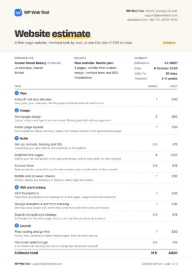 See an example quote (PDF)
Every task listed with its hours, so you can check the total line by line.
Related sectors: trades · estate agents · manufacturers · Bath · all industries